Cambridge hospitals energy centre granted planning permission
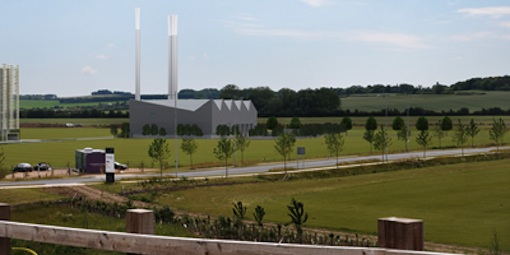
An artist’s impression of the energy innovation centre shows the scale of the project
An energy innovation centre which could cut the carbon footprint of Cambridge University Hospitals (CUH) by 30,000 tonnes a year has been granted planning permission. The facility would produce low-carbon electricity, heating and hot water to Cambridge’s Addenbrooke’s and Rosie hospitals, reducing carbon emissions by 47 per cent over the 25-year contract term and grid electricity by over 50 per cent.
19 July 2013 – A major new energy innovation centre which will deliver significant carbon and cost savings for Cambridge University Hospitals (CUH) has passed a milestone with the approval of planning permission.
The energy innovation centre, which is expected to be one of the largest projects of its type in the UK, will provide low carbon heating, hot water and electricity for the Addenbrooke’s and Rosie hospitals. It has been designed with the potential to provide energy to future developments on the Cambridge Biomedical Campus.
The new energy centre aims to reduce CUH’s carbon footprint by 30,000 tonnes of CO2 a year, helping the Trust to surpass sustainability targets. This could mean a 47 per cent cut in carbon emissions over the 25-year contract term. Grid electricity will be cut by more than 50 per cent.
St.Clair Armitage, CUH director for corporate development, said: “We are very pleased that this excellent project has received planning permission from the county council. Subject to further approvals, the energy innovation centre will deliver significant economic and sustainability benefits for CUH and our partners on the Cambridge Biomedical Campus. The low carbon, state-of-the-art energy centre will provide us with greater energy independence and reduce the impact of rising energy prices.”
MITIE was awarded the contract to develop and operate the energy innovation centre in March last year. It will be developed in partnership with the NHS Carbon and Energy Fund which supports projects which meet a certain level of carbon savings.
Following planning approval from Cambridge County Council, Utilyx, MITIE’s integrated energy solutions business, will start work on the energy centre next Spring. The 2,675sqm energy innovation centre will be fully operational by 2015.
The new energy innovation centre will house a combined heat and power unit, biomass boiler, efficient dual fuel boilers and heat recovery from clinical waste incineration.
Mark Stokes, managing director of Utilyx’s asset management division, said: “This is a major milestone for this important project which will have a material impact on Cambridge University Hospital’s carbon emissions and energy costs. We’re really excited about moving forward and enabling the energy innovation centre in partnership with Cambridge University Hospitals.”
The Trust’s existing energy centre houses the NHS’s first combined heat and power plant which, for the last 20 years, has been providing sustainable energy to the expanding campus. The Trust incinerates its clinical waste onsite within the energy centre and uses clinical waste produced on the campus as a fuel source to provide heat and hot water to the campus.
Besides the development of the energy centre, Utilyx will also reduce energy demand on the existing CUH campus through a number of initiatives including a major lighting upgrade throughout the hospital.
Peter Brett Associates LLP (PBA) led the pre-application work for the project; providing town planning and Environmental Impact Assessment advice and coordination. The consultancy produced a number of assessments including air quality, noise, transport, drainage and flood risk, waste, and ground conditions work.
John Parmiter, PBA partner, said: “We are very proud to be involved in such a significant project. This builds further on our experience in the renewable energy sector.”
For further information, please visit www.cuh.org.uk